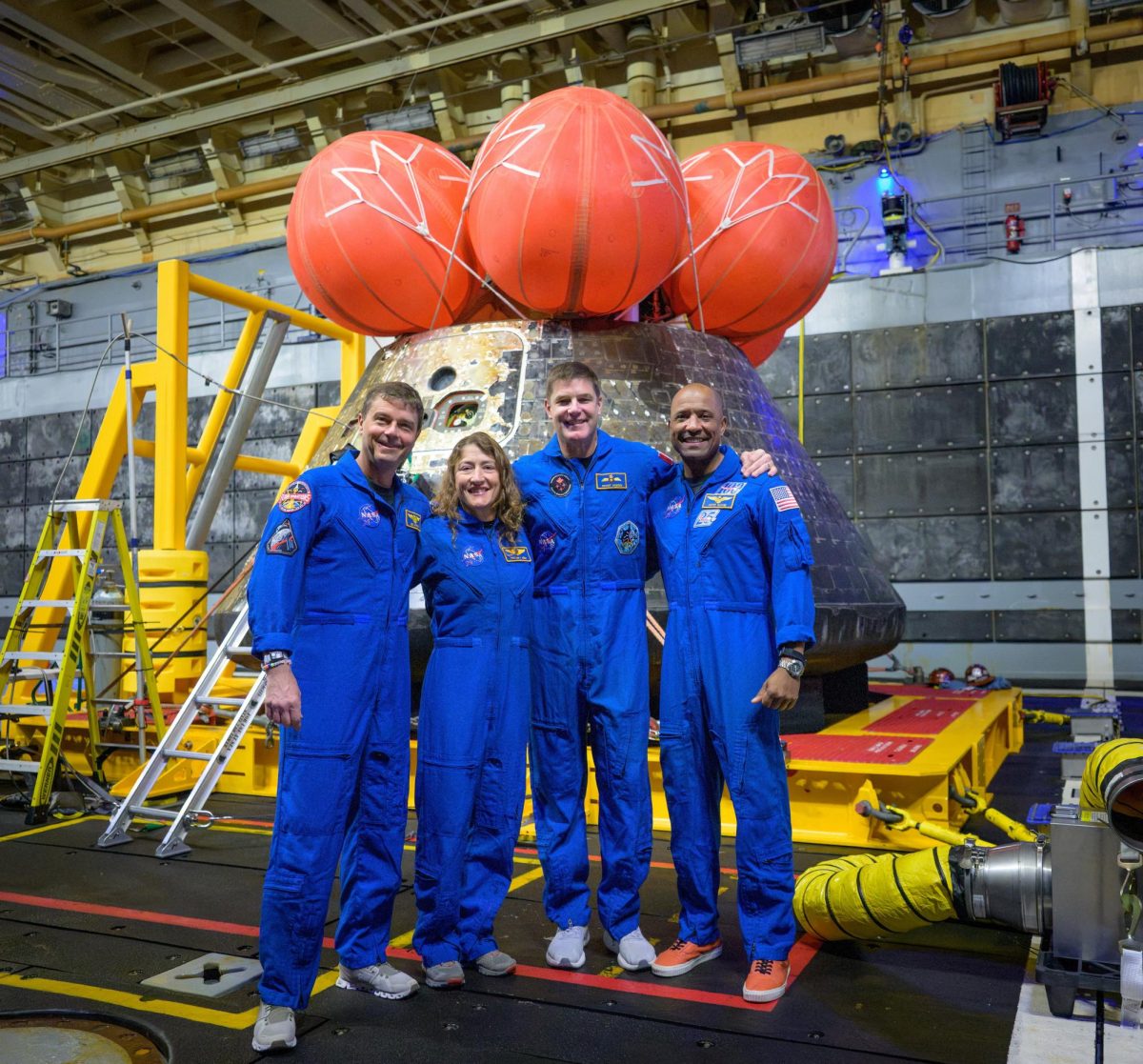
NASA has just set a new record for the furthest crewed flight with Artemis II. The previous record was set by Apollo 13 in 1970, with a distance of 248,655 miles from Earth. Artemis II did not land on the moon; it circled it, going a total of over 252,000 miles from Earth.
Artemis II was the first crewed flight beyond low Earth orbit since 1972. The crew consisted of Reid Wiseman, Victor Glover, Christina Koch, and Jeremy Hansen.
Hansen, a Canadian, became the first non-American to fly to the moon. In addition, Christina Koch became the first woman to travel to deep space. Victor Glover also became the first man of color to fly to the moon.
The mission offered views of parts of the moon’s far side never before seen by human eyes. Artemis II used advanced digital systems that transmit 38 gigabytes of data per day, providing high-resolution views of the moon’s surface.
The crew witnessed a rare total solar eclipse from behind the moon, a sight no human has ever seen before in person.
While the Artemis II mission is crewed by only four astronauts, building the spacecraft and supporting infrastructure involved tens of thousands of people across NASA and partner agencies. It was vital to the success of the mission that each and every one of these engineers perfected the rocket so that it did not have any failures.
The team discovered two new small craters. They named one Integrity after the crew’s Orion spacecraft. The other one was named Carroll to honor Carroll Taylor Wiseman, the late wife of Commander Reid Wiseman, who passed away in 2020.
The Artemis II mission accelerates the new space race by re-establishing U.S. leadership in deep space. Unlike the Cold War Apollo era, this competition focuses on building a permanent lunar presence, with Artemis II allowing commercial partners like SpaceX or Blue Origin to return humans to the surface of the moon.
People are often divided on space exploration. Some say that since there are so many problems here on Earth, America should not be dumping billions of dollars into going to space. While they have a point, beating other countries in the space race develops dominance and helps the U.S. economy.