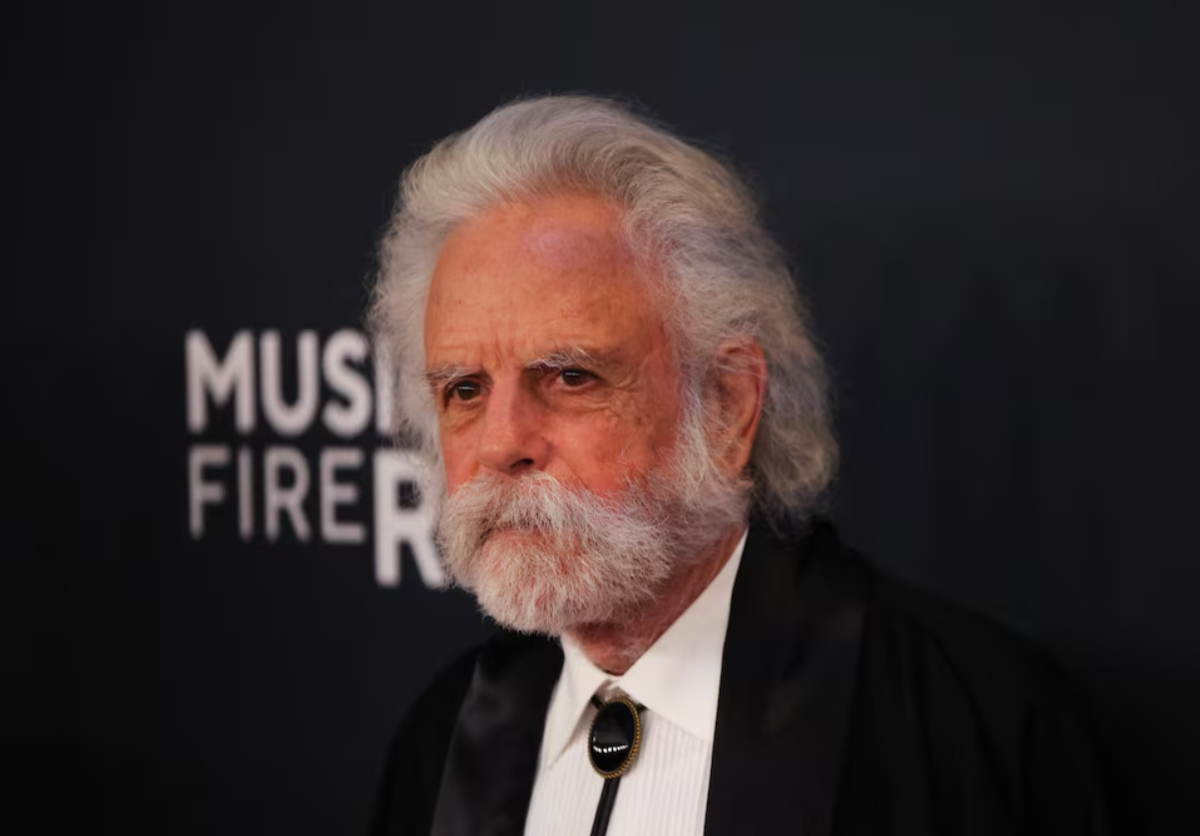
Bob Weir, the co-founder of the Grateful Dead, died last week at age 78.
Weir is a foundational figure in shaping the psychedelic rock scene. His innovative, jazz-inspired guitar style opened up pathways to seamlessly blending genres like rock, folk, blues, and country.
Weir and Grateful Dead showed that live performance didn’t just have to be about promoting a new album. Instead, it could be central to a group’s musical identity and platform, ultimately defining what it means to be a jam band. The success of this ideology is evident in the Dead’s sellout performances despite their lack of hits.
No two performances were ever the same, with rearrangements of songs being created on the daily. Dedicated fans, known as “Deadheads,” would follow the band through their busy schedules, filming and trading show recordings, as every performance was considered unique and a once in a lifetime experience.
Although Weir is known primarily for Grateful Dead and its various offshoots (Further, The Other Ones, the Dead, Dead & Company), his creativity and determination to carve out his musical legacy knew no limits. He also founded and had been a part of multiple other music groups, including Kingfish, Bobby and the Midnites, RatDog, and Wolf Bros, where he has also found success.
Even after more than half a century, Weir stayed busy on stage, maintaining his emphasis on live performance. He played his final concert with Dead & Company last August to celebrate the Grateful Dead’s 60th anniversary. The final track in the concert and the Dead’s highest charting song, “Touch of Grey,” serves as a fitting and bittersweet farewell to Weir’s days performing.
Weir’s influence has shaped improvisational rock and his legacy will continue to live on in his expansive projects and discography.