Sophomore soccer player Evelyn Johnson was invited to a regional Olympic Development camp in July, and did everything possible to show out. Little did she know that this would lead to an injury that would force her to miss most of her sophomore high school soccer season.
“It was very hard for me to sit out because I truly love soccer so much. I am very passionate about the sport, so the drastic change from playing every day to suddenly not playing at all was kind of a shock,” Johnson said.
Injury prevention is regularly a hot topic in sports conversations, from the pros on down to the high school level. Experts say that while there is no way to guarantee full injury prevention, there are ways to help.
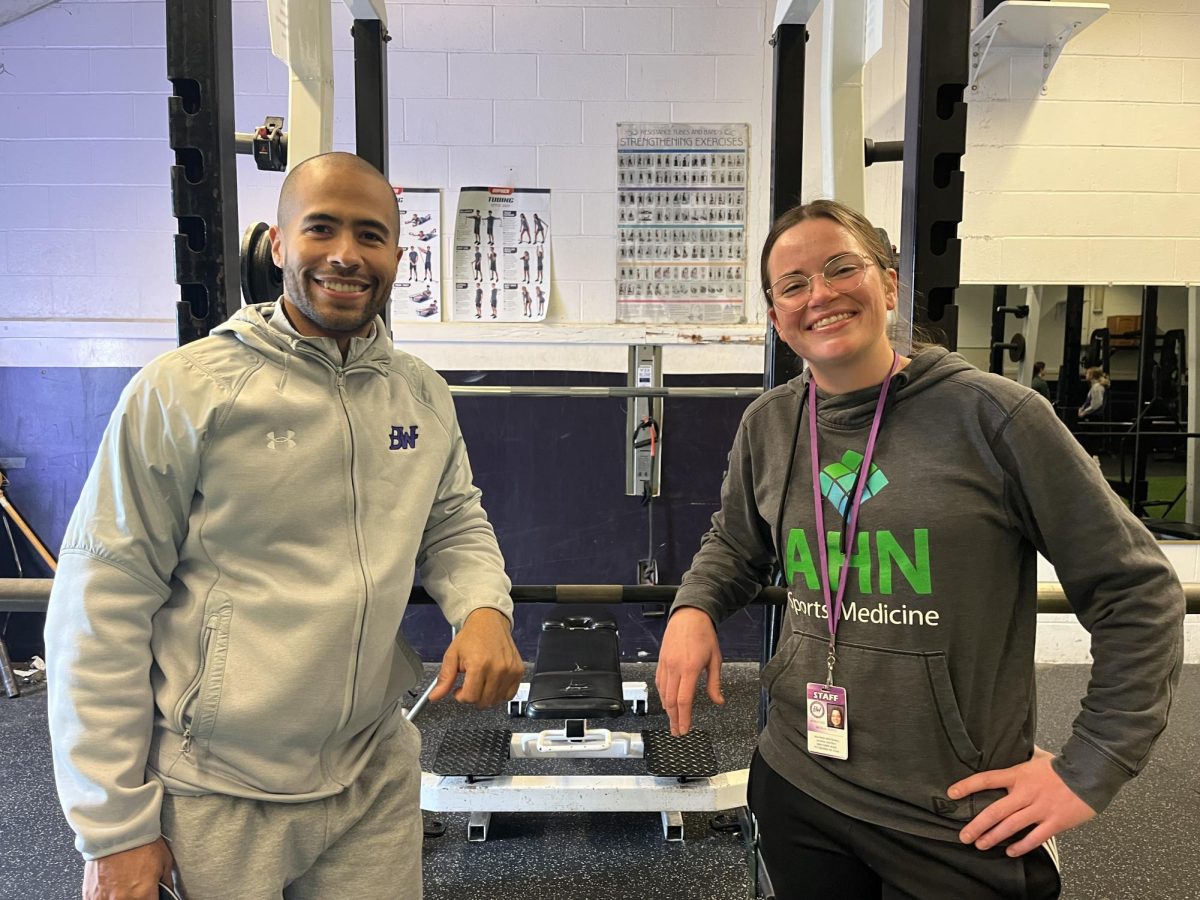
Athletes can prepare for structural injuries that deal with soft tissue, such as muscle, tendon, or ligament, but injuries cannot ever be completely prevented, Baldwin athletic trainer Natalie Sorce said.
“Things like comprehensive strength training and neuromuscular training can help to prepare the body to be able to react stronger and quicker when a joint is forced out of place to reduce the likelihood of sustaining a significant injury. Having those things already developed before an injury happens also gives you a solid base of strength and proprioception to work with when recovering from an injury,” Sorce said.
Collision sports and contact sports are the most susceptible to injury, whether it is a broken bone, dislocation, or a soft tissue injury, Sorce said.
“Contact injuries are often unpredictable and unavoidable. However, strength training can significantly lower the risk of non-contact injuries,” Baldwin Assistant Athletic Director Jeremy McCullough said.
Contact is not always the issue, though, as injuries usually are not from contact at all, McCullough said.
“The biggest cause of injury that I have seen isn’t contact,” McCullough said. “It’s ‘too much, too soon, too often.’ ”
Non-contact injuries can be prevented by preparing the body with strength training, proper fueling and rest, and properly fitting equipment, Sorce said.
Junior cross country runner Nate Chardello had such an injury when he strained his calf last year. He missed four months of his sophomore season.
“My injury happened due to poor form and increasing mileage too quickly over the summer,” Chardello said. “It affected my last few meets of cross country, and then it had me out for the rest of the year until summer.”
Conditioning is an important part of preparing for injury as well, McCullough said. Athletes should build themselves a strong foundation of both strength and conditioning, and maintain it year-round.
For female athletes, an extra factor goes into injury risk and prevention. Injury could be more likely depending on what phase they are in in their menstrual cycle, Sorce said.
According to a review of studies published by the National Institute of Health, “hormonal fluctuations throughout the menstrual cycle alter values such as laxity, strength, body temperature, and neuromuscular control, among others. This fact causes women to constantly adapt to hormonal variations, which exposes them to a higher risk of injury.”
Recovery is also very important in the conversation about injuries. While most believe that rest is the most important part of injury recovery, that is not true.
“Strength training, when introduced at the right stage of recovery, helps injured athletes return faster and stronger,” McCoullough said. “After an injury, athletes are often told to rest, but excessive rest can lead to muscle loss, stiffness, longer recovery times, and re-injury.”
When athletes get injured, it is important to report it to a trainer or doctor as soon as possible.
“Generally, the sooner an athlete reports an injury to us, the sooner we can work with them on a rehab plan to recover and regain the strength and function that the injury took away,” Sorce said.
Chardello found that physical therapy and reintroducing running slowly helped him recover. Even with this recovery plan, it took about three months to get back to where he was, Chardello said. Johnson has also found that physical therapy has been the most helpful recovery option.
The key to avoiding injuries is to prepare and condition, McCullough said.
“In every sport, injuries are part of the game,” McCullough said. “Being well-rounded and training all three qualities – strength, power, and speed – in the appropriate amounts is the best way to become a better athlete and stay healthy throughout a season.”